I've spent my career studying the failures of democracy — and working to redesign the systems that produce them.
Whether I was in classrooms, courtrooms, or city halls, I've seen the impacts of a government that was never designed to serve all of us. The harm of this reality is felt deepest in the hopelessness it generates — the civic trauma that accumulates over generations, teaching us not to trust a system that will let us down.
But that past doesn't have to be our future.
My work is about reclaiming government as a tool to fulfill our duty of care. By redesigning how we govern — and what we fight for — we can build a democracy worthy of our belief.
To get there, our governance must be responsive, accountable, and engaging to earn public trust. Our economy has to be reconfigured — designed to prioritize our health, care for our most vulnerable, and leave a thriving planet for future generations.
We deserve a future that allows us to live into our own humanity.
Let's build it.
Select examples of public speaking, writing, and media interviews.
I'm a civic strategist working to change our political future. I've spent the last two decades studying the ways our democracy has failed us — and designing experiments that prove we can build a future rooted in care, dignity, and self-determination for all.
I've spent my career moving people from disillusionment to practicing collective power — and reclaiming government as a tool to care for all of us. This work has brought me into partnership with movement organizers, government leaders, philanthropic partners, civil rights attorneys, and academic researchers. Beyond the many hats I've worn, I've always been a bridger — someone leaders trust to help them build bold policy ideas, and the coalitions necessary to win.
Whether I'm building policy, public process, organizations, or coalitions, I'm clear-eyed about who I'm building for: all of us. In a nation where power has been hoarded by the few, my approach centers communities who have learned not to trust a system that wasn't built for them. My work aims not just to engage people differently — but to build the policies, governing practices, and civic systems that shift how power works.
We have yet to see a democracy that effectively serves a multiracial nation. But by weaving together new governing practices, policies, and narratives, we can open a pathway to a new future — recognizing our shared struggles, rooting ourselves in solidarity, and daring enough to build the democracy we deserve.
We've never experienced a democracy designed for us to solve problems together. But what if governing was a collective exercise — one that can bring us closer to one another?
As a facilitator and adviser on collaborative governance practices, I've seen how building policy together can connect us to each other's needs, rooting us in a duty of care for each other and our shared future.
Throughout my career, I've worked to reconcile the aspiration of a nation founded on the promise of self-determination — with a nation never designed to deliver it.
For fourteen years I've advised government leaders on the economic architecture of a more just society — redesigning Community Development Block Grant formulas for equitable investment, building municipal investment strategies that leverage public pension funds for broader social benefit, and supporting cities to adopt growth models that address racial wealth gaps while paying dividends to our environment.
Now, I'm working to build models for the economy we need — an Economy of Care. I support policymakers seeking to leverage public dollars and public jobs to further the duty of care: for our health and well-being, our communities, and our planet.
In 2017, I left my job knowing that I would not be able to shift the culture of Chicago city government working within one sector. So I built something different: an organizing approach to culture change, seeding ideas across the civic ecosystem and aligning narratives to build public demand for reform.
Within five years, that strategy built a public demand answered by Chicago's first Office of Equity and Racial Justice, a citywide budgeting process rooted in equity, and a field-leading collaborative governance approach. None of that was possible without narrative organizing.
Narrative is how movements make new ideas feel inevitable. It's the work of shifting what people believe is possible — and changing what they're willing to accept. I train and advise grassroots campaigns, government leaders, and political organizations in how to build narrative organizing that drives social change.
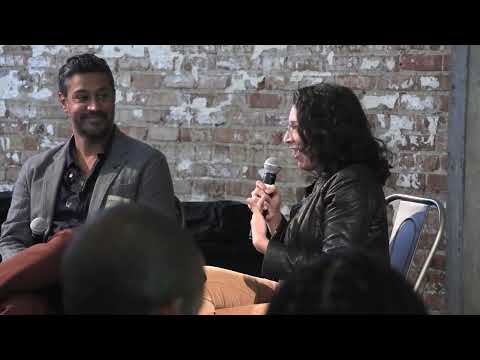
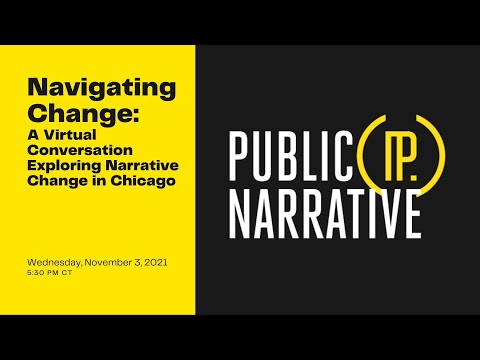
A selection of media engagements — spanning video, radio, print, and public conversation — that reflect the breadth of this work.
I'm always open to a good conversation — whether you have an idea worth exploring, a question worth sitting with, or an invitation to extend.
Essays across each of Chicago's 77 neighborhoods — on community, democracy, and the emergence of something new.
Read & Subscribe ↗